Showing posts with label Physics. Show all posts
Showing posts with label Physics. Show all posts
Saturday, 12 May 2012
The Radium Dance
From the 1904 Broadway Musical, 'Piff! Paff! Pouff!' Find out more information and hear a recording here.

Monday, 7 May 2012
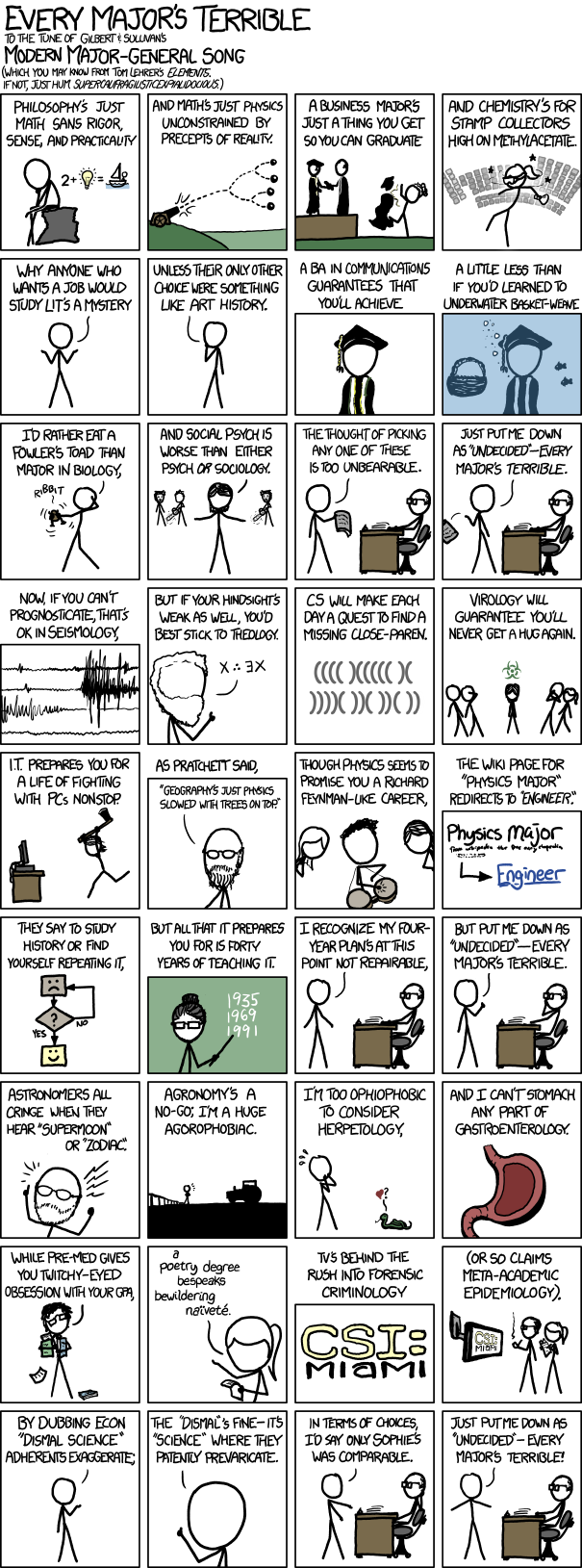
Wednesday, 11 March 2009
A Function of the Time - reminder
A reminder that tomorrow evening Jeff Hughes will be speaking at the Whipple Museum for the History of Science on: ‘A Function of the Time’: The Cavendish Society and its Postprandial Proceedings.
As the number of research students grew at the Cavendish Laboratory in the late nineteenth and early twentieth centuries, so did their collective sense of social and professional identity. At their annual dinner, the research students sang humorous songs specially written by members of the laboratory to well-known tunes or airs, or even Gilbert and Sullivan numbers. With teasing affection, gentle parody and witty wordplay, the songs celebrated the scientific work and social life of the laboratory, its exemplary past achievements and its iconic figures. This talk will show how the ‘Postprandial Proceedings of the Cavendish Society’ helped constitute the research community, and will explore what the songs reveal about the culture of the Cavendish Laboratory and Cambridge physics in the ‘string and sealing wax’ era of Rayleigh, Thomson and Rutherford.
The 'HPS chorus' will be singing 'Ions Mine', 'Isotopes', and 'hv' as part of his presentation.
The museum will open from 5.30 with the talk beginning at 6 - you are advised to arrive early to ensure a place.
This event is also part of the Cambridge Science Festival.
As the number of research students grew at the Cavendish Laboratory in the late nineteenth and early twentieth centuries, so did their collective sense of social and professional identity. At their annual dinner, the research students sang humorous songs specially written by members of the laboratory to well-known tunes or airs, or even Gilbert and Sullivan numbers. With teasing affection, gentle parody and witty wordplay, the songs celebrated the scientific work and social life of the laboratory, its exemplary past achievements and its iconic figures. This talk will show how the ‘Postprandial Proceedings of the Cavendish Society’ helped constitute the research community, and will explore what the songs reveal about the culture of the Cavendish Laboratory and Cambridge physics in the ‘string and sealing wax’ era of Rayleigh, Thomson and Rutherford.
The 'HPS chorus' will be singing 'Ions Mine', 'Isotopes', and 'hv' as part of his presentation.
The museum will open from 5.30 with the talk beginning at 6 - you are advised to arrive early to ensure a place.
This event is also part of the Cambridge Science Festival.
"hv"
Tune: "Men of Harlech"
1. All black body radiations,
All the spectrum variations,
All atomic oscillations
Vary as "hv."
Chorus:
Here's the right relation
Governs radiation,
Here's the new,
And only true,
Electrodynamical equation;
Never mind your d/dt2,
Ve or half mv2
(If you watch the factor "c2")
"'s" equal to "hv."
2. Ultraviolet vibrations,
X and gamma ray pulsations,
Ordinary light sensations
All obey "hv."
3. Even in matters calorific,
Such things as the heat specific
Yield to treatment scientific
If you use "hv."
4. In all questions energetic
Whether static or kinetic,
Or electric, or magnetic,
You must use "hv."
5. There would be a mighty clearance,
We should all be Planck's adherants,
Were it not that interference
Still defines "hv."
G.S.
The Postprandial Proceedings of the Cavendish Society, pp. 25-26.
1. All black body radiations,
All the spectrum variations,
All atomic oscillations
Vary as "hv."
Chorus:
Here's the right relation
Governs radiation,
Here's the new,
And only true,
Electrodynamical equation;
Never mind your d/dt2,
Ve or half mv2
(If you watch the factor "c2")
"'s" equal to "hv."
2. Ultraviolet vibrations,
X and gamma ray pulsations,
Ordinary light sensations
All obey "hv."
3. Even in matters calorific,
Such things as the heat specific
Yield to treatment scientific
If you use "hv."
4. In all questions energetic
Whether static or kinetic,
Or electric, or magnetic,
You must use "hv."
5. There would be a mighty clearance,
We should all be Planck's adherants,
Were it not that interference
Still defines "hv."
G.S.
The Postprandial Proceedings of the Cavendish Society, pp. 25-26.
Isotopes
Tune: "I Stole the Prince" (Or, "The Highly Respectable Gondolier") - The Gondoliers, Gilbert & Sullivan
As sung at the Cavendish Dinner, Feb. 24th, 1923.
1. Since J.J. on the game began
By analysing Neon,
Many a speculative man
Had isotopic thoughts which ran
Beyond a paper's rightful span,
So this did all agree on -
It needs a man both strong and stout
These isotopes to sever;
Of this there is no possible doubt,
No probable, possible shadow of doubt,
No possible doubt whatever.
2. So Aston made a cute "machine"
For atom separations.
The atoms passed through fields serene,
Magnetic poles they went between,
And made some marks upon a screen,
Apart from their relations.
The numbers whole were soon made out
By methods neat and clever;
Of this there was no manner of doubt,
No probable, possible shadow of doubt,
No possible doubt whatever.
3. Then isotopes of every kind
Grew more in number daily,
And Aston thrust all he could find
Before the harassed and reeling mind
Of a sympathetic but dazed mankind
Most casually and gaily.
The rule of numbers whole to flout
He made his next endeavour;
Of this there's now no manner of doubt,
No probable, possible shadow of doubt,
No possible doubt whatever.
4. Now Christmas time was drawing near,
And as Nobel Prize winner,
For Stockholm soon he had to clear,
(Then he followed the trade of a mountaineer),
And now we're all glad we've got him here
To cheer him at our Dinner.
"He's a jolly good fellow!" Then let us shout
In louder tones than ever -
Of this there is no possible doubt,
No probable, possible shadow of doubt,
No possible doubt whatever.
E.C.S.
The Postprandial Proceedings of the Cavendish Society, pp. 32-33.
As sung at the Cavendish Dinner, Feb. 24th, 1923.
1. Since J.J. on the game began
By analysing Neon,
Many a speculative man
Had isotopic thoughts which ran
Beyond a paper's rightful span,
So this did all agree on -
It needs a man both strong and stout
These isotopes to sever;
Of this there is no possible doubt,
No probable, possible shadow of doubt,
No possible doubt whatever.
2. So Aston made a cute "machine"
For atom separations.
The atoms passed through fields serene,
Magnetic poles they went between,
And made some marks upon a screen,
Apart from their relations.
The numbers whole were soon made out
By methods neat and clever;
Of this there was no manner of doubt,
No probable, possible shadow of doubt,
No possible doubt whatever.
3. Then isotopes of every kind
Grew more in number daily,
And Aston thrust all he could find
Before the harassed and reeling mind
Of a sympathetic but dazed mankind
Most casually and gaily.
The rule of numbers whole to flout
He made his next endeavour;
Of this there's now no manner of doubt,
No probable, possible shadow of doubt,
No possible doubt whatever.
4. Now Christmas time was drawing near,
And as Nobel Prize winner,
For Stockholm soon he had to clear,
(Then he followed the trade of a mountaineer),
And now we're all glad we've got him here
To cheer him at our Dinner.
"He's a jolly good fellow!" Then let us shout
In louder tones than ever -
Of this there is no possible doubt,
No probable, possible shadow of doubt,
No possible doubt whatever.
E.C.S.
The Postprandial Proceedings of the Cavendish Society, pp. 32-33.
The Large Hadron Rap
Twenty-seven kilometers of tunnel under ground
Designed with mind to send protons around
A circle that crosses through Switzerland and France
Sixty nations contribute to scientific advance
Two beams of protons swing round, through the ring they ride
‘Til in the hearts of the detectors, they’re made to collide
And all that energy packed in such a tiny bit of room
Becomes mass, particles created from the vacuum
And then…
LHCb sees where the antimatter’s gone
ALICE looks at collisions of lead ions
CMS and ATLAS are two of a kind
They’re looking for whatever new particles they can find.
The LHC accelerates the protons and the lead
And the things that it discovers will rock you in the head.
We see asteroids and planets, stars galore
We know a black hole resides at each galaxy’s core
But even all that matter cannot explain
What holds all these stars together – something else remains
This dark matter interacts only through gravity
And how do you catch a particle there’s no way to see
Take it back to the conservation of energy
And the particles appear, clear as can be
You see particles flying, in jets they spray
But you notice there ain’t nothin’, goin’ the other way
You say, “My law has just been violated – it don’t make sense!
There’s gotta be another particle to make this balance.”
And it might be dark matter, and for first
Time we catch a glimpse of what must fill most of the known ‘Verse.
Because…
LHCb sees where the antimatter’s gone
ALICE looks at collisions of lead ions
CMS and ATLAS are two of a kind
They’re looking for whatever new particles they can find.
Antimatter is sort of like matter’s evil twin
Because except for charge and handedness of spin
They’re the same for a particle and its anti-self
But you can’t store an antiparticle on any shelf
Cuz when it meets its normal twin, they both annihilate
Matter turns to energy and then it dissipates
When matter is created from energy
Which is exactly what they’ll do in the LHC
You get matter and antimatter in equal parts
And they try to take that back to when the universe starts
The Big Bang – back when the matter all exploded
But the amount of antimatter was somehow eroded
Because when we look around we see that matter abounds
But antimatter’s nowhere to be found.
That’s why…
LHCb sees where the antimatter’s gone
ALICE looks at collisions of lead ions
CMS and ATLAS are two of a kind
They’re looking for whatever new particles they can find.
The LHC accelerates the protons and the lead
And the things that it discovers will rock you in the head.
The Higgs Boson – that’s the one that everybody talks about.
And it’s the one sure thing that this machine will sort out
If the Higgs exists, they ought to see it right away
And if it doesn’t, then the scientists will finally say
“There is no Higgs! We need new physics to account for why
Things have mass. Something in our Standard Model went awry.”
But the Higgs – I still haven’t said just what it does
They suppose that particles have mass because
There is this Higgs field that extends through all space
And some particles slow down while other particles race
Straight through like the photon – it has no mass
But something heavy like the top quark, it’s draggin’ its ***
And the Higgs is a boson that carries a force
And makes particles take orders from the field that is its source.
They’ll detect it….
LHCb sees where the antimatter’s gone
ALICE looks at collisions of lead ions
CMS and ATLAS are two of a kind
They’re looking for whatever new particles they can find.
Now some of you may think that gravity is strong
Cuz when you fall off your bicycle it don’t take long
Until you hit the earth, and you say, “Dang, that hurt!”
But if you think that force is powerful, you’re wrong.
You see, gravity – it’s weaker than Weak
And the reason why is something many scientists seek
They think about dimensions – we just live in three
But maybe there are some others that are too small to see
It’s into these dimensions that gravity extends
Which makes it seem weaker, here on our end.
And these dimensions are “rolled up” – curled so tight
That they don’t affect you in your day to day life
But if you were as tiny as a graviton
You could enter these dimensions and go wandering on
And they'd find you...
When LHCb sees where the antimatter’s gone
ALICE looks at collisions of lead ions
CMS and ATLAS are two of a kind
They’re looking for whatever new particles they can find.
The LHC accelerates the protons and the lead
And the things that it discovers will rock you in the head!
See it on YouTube here. Further details here.
Designed with mind to send protons around
A circle that crosses through Switzerland and France
Sixty nations contribute to scientific advance
Two beams of protons swing round, through the ring they ride
‘Til in the hearts of the detectors, they’re made to collide
And all that energy packed in such a tiny bit of room
Becomes mass, particles created from the vacuum
And then…
LHCb sees where the antimatter’s gone
ALICE looks at collisions of lead ions
CMS and ATLAS are two of a kind
They’re looking for whatever new particles they can find.
The LHC accelerates the protons and the lead
And the things that it discovers will rock you in the head.
We see asteroids and planets, stars galore
We know a black hole resides at each galaxy’s core
But even all that matter cannot explain
What holds all these stars together – something else remains
This dark matter interacts only through gravity
And how do you catch a particle there’s no way to see
Take it back to the conservation of energy
And the particles appear, clear as can be
You see particles flying, in jets they spray
But you notice there ain’t nothin’, goin’ the other way
You say, “My law has just been violated – it don’t make sense!
There’s gotta be another particle to make this balance.”
And it might be dark matter, and for first
Time we catch a glimpse of what must fill most of the known ‘Verse.
Because…
LHCb sees where the antimatter’s gone
ALICE looks at collisions of lead ions
CMS and ATLAS are two of a kind
They’re looking for whatever new particles they can find.
Antimatter is sort of like matter’s evil twin
Because except for charge and handedness of spin
They’re the same for a particle and its anti-self
But you can’t store an antiparticle on any shelf
Cuz when it meets its normal twin, they both annihilate
Matter turns to energy and then it dissipates
When matter is created from energy
Which is exactly what they’ll do in the LHC
You get matter and antimatter in equal parts
And they try to take that back to when the universe starts
The Big Bang – back when the matter all exploded
But the amount of antimatter was somehow eroded
Because when we look around we see that matter abounds
But antimatter’s nowhere to be found.
That’s why…
LHCb sees where the antimatter’s gone
ALICE looks at collisions of lead ions
CMS and ATLAS are two of a kind
They’re looking for whatever new particles they can find.
The LHC accelerates the protons and the lead
And the things that it discovers will rock you in the head.
The Higgs Boson – that’s the one that everybody talks about.
And it’s the one sure thing that this machine will sort out
If the Higgs exists, they ought to see it right away
And if it doesn’t, then the scientists will finally say
“There is no Higgs! We need new physics to account for why
Things have mass. Something in our Standard Model went awry.”
But the Higgs – I still haven’t said just what it does
They suppose that particles have mass because
There is this Higgs field that extends through all space
And some particles slow down while other particles race
Straight through like the photon – it has no mass
But something heavy like the top quark, it’s draggin’ its ***
And the Higgs is a boson that carries a force
And makes particles take orders from the field that is its source.
They’ll detect it….
LHCb sees where the antimatter’s gone
ALICE looks at collisions of lead ions
CMS and ATLAS are two of a kind
They’re looking for whatever new particles they can find.
Now some of you may think that gravity is strong
Cuz when you fall off your bicycle it don’t take long
Until you hit the earth, and you say, “Dang, that hurt!”
But if you think that force is powerful, you’re wrong.
You see, gravity – it’s weaker than Weak
And the reason why is something many scientists seek
They think about dimensions – we just live in three
But maybe there are some others that are too small to see
It’s into these dimensions that gravity extends
Which makes it seem weaker, here on our end.
And these dimensions are “rolled up” – curled so tight
That they don’t affect you in your day to day life
But if you were as tiny as a graviton
You could enter these dimensions and go wandering on
And they'd find you...
When LHCb sees where the antimatter’s gone
ALICE looks at collisions of lead ions
CMS and ATLAS are two of a kind
They’re looking for whatever new particles they can find.
The LHC accelerates the protons and the lead
And the things that it discovers will rock you in the head!
See it on YouTube here. Further details here.
Friday, 20 February 2009
A Function of the Time - The Cavendish Society and its Postprandial Proceedings

Thursday 12th March, 5.30-7pm, talk at 6pm
Whipple Museum of the History of Science, Free School Lane, Cambridge

A century ago, students in the Cavendish Laboratory wrote and sang humorous songs about science at their annual dinner, to well-known tunes. This talk will explore what the proceedings reveal about the culture of the Cambridge physics research community, and will include performances of these songs by the HPS chorus.
Further details on the Whipple Museum pages here, and the Cambridge Science Festival pages here.
The Radium Atom
Air: “The Tarpaulin Jacket.”
I. A radium atom was dying,
And just ere it burst up for aye,
Corpuscles, which round it were flying,
These last dying words heard it say –
Chorus: Oh, I am a radium atom,
In pitchblende I first saw the day,
But soon I shall turn into helium:
My energy’s wasting away.
2. About the laborat’ry latterly
I always have seemed in the way;
I’ve worried both Campbell and Satterly*
And many bad things made them say.
3. I often have got in a frenzy,
As down in the cellar I lay,
Being tortured by Huff or Mackenzie§
Deflecting my poor α ray.
4. The theories about my interior
Proposed by the men of to-day,
Would make me appear quite inferior –
A crowd of corpuscles at play.
5. When wishing to be in the fashion
My γ corpuscle they slay,
And state that, according to Paschen, †
‘Tis merely a swift β ray.
6. Through me they say life was created
Any animals formed out of clay,
With bouillon I’m told I was mated
And started the life of to-day.‡
7. To build up my weak constitution
I’m trusting myself to J. J.,
He’ll get the most truthful solution
Of all who have entered the fray.
8. My temperature’s very unsteady,
I’m losing in weight every day;
But if the end’s near I am ready, -
At least, life’s been lengthy and gay!
F.H.
*N.R. Campbell and J. Satterly , On the use and abuse of radioactive needles for delicate electrometers, Proc. Cav. Lab., Oct. and Nov., 1904.
§A.S. Mackenzie, Phil. Mag., vol. 10, p. 538, 1905.
†PASCHEN, Physikalische Zeitschrift, Vol. 5, p. 563, 1904.
‡Daily Chronicle, June, July and August, 19045; Punch, July 12, 1905.
From The Postprandial Proceedings of the Cavendish Physical Society (1911 fourth edition), pp. 6-7.
I. A radium atom was dying,
And just ere it burst up for aye,
Corpuscles, which round it were flying,
These last dying words heard it say –
Chorus: Oh, I am a radium atom,
In pitchblende I first saw the day,
But soon I shall turn into helium:
My energy’s wasting away.
2. About the laborat’ry latterly
I always have seemed in the way;
I’ve worried both Campbell and Satterly*
And many bad things made them say.
3. I often have got in a frenzy,
As down in the cellar I lay,
Being tortured by Huff or Mackenzie§
Deflecting my poor α ray.
4. The theories about my interior
Proposed by the men of to-day,
Would make me appear quite inferior –
A crowd of corpuscles at play.
5. When wishing to be in the fashion
My γ corpuscle they slay,
And state that, according to Paschen, †
‘Tis merely a swift β ray.
6. Through me they say life was created
Any animals formed out of clay,
With bouillon I’m told I was mated
And started the life of to-day.‡
7. To build up my weak constitution
I’m trusting myself to J. J.,
He’ll get the most truthful solution
Of all who have entered the fray.
8. My temperature’s very unsteady,
I’m losing in weight every day;
But if the end’s near I am ready, -
At least, life’s been lengthy and gay!
F.H.
*N.R. Campbell and J. Satterly , On the use and abuse of radioactive needles for delicate electrometers, Proc. Cav. Lab., Oct. and Nov., 1904.
§A.S. Mackenzie, Phil. Mag., vol. 10, p. 538, 1905.
†PASCHEN, Physikalische Zeitschrift, Vol. 5, p. 563, 1904.
‡Daily Chronicle, June, July and August, 19045; Punch, July 12, 1905.
From The Postprandial Proceedings of the Cavendish Physical Society (1911 fourth edition), pp. 6-7.
An Alpha Ray
Air: “A Jovial Monk”
I. An alpha ray was I, contended with my lot;
From Radium C
I was set free,
And outwards I was shot.
My speed I quickly reckoned,
As I flew off through space,
Ten thousand miles per second
Is not a trifling pace!
For an alpha ray
Goes a good long way
In a short time t,
As you easily see,
Though I don’t know why
My speed’s so high,
Or why I bear a charge 2e.
2. And in my wild career, as swiftly on I flew,
A rarefied gas
Wouldn’t let me pass,
But I pushed my way right through.
I had some lively tussles
To make it ionize,
But I set the small corpuscles
A-buzzing round like flies.
For an alpha ray
Hasn’t time to stay
While a trifling mass
Of expanded gas,
That stands in awe
Of Maxwell’s law,
Obstructs the road when I want to pass.
3. An electroscope looked on, as I made that gas conduct;
Beneath the field
The gas did yield
And the leaf was greatly “bucked.”
But in my exultation
I lost my senses clean,
And I made a scintillation
As I struck a zinc-blende screen
For an alpha ray
Makes a weird display
With fluorescence green
On a zinc-blende screen
When the room’s quite dark,
You see a spark
That marks the spot where I have been.
4. But now I’m settled down, and move about quite slow;
For I, alas,
Am helium gas
Since I got that dreadful blow.
But though I’m feeling sickly,
Still no one now denies,
That I ran that race so quickly
I’ve won a Nobel Prize.
For an alpha ray
Is a thing to pay,
And a Nobel Prize
One can not despise,
And Rutherford
Has greatly scored,
As all the world now recognise.
A.A.R.
From The Post-Prandial Proceedings of the Cavendish Physical Society (1911 4th edition), pp. 14-15.
My Name is J.J. Thomson...
Air: “Solomon Levi.”
I. My name is J.J. Thomson and my lab’s in Free School Lane,
If once a man has been inside he’s sure to come again,
Here some do play with Töpler pumps, and some with liquid air,
And some do play the giddy goat, but that’s not here nor there.
Chorus:
Oh! J. J. Thomson, J. J. Tra-la-la-la,
Sir Joseph Thomson, Tra-la-la-la-la-la-la-la-la-la-la,
My name is J. J. Thomson, and my lab’s in Free School Lane,
There’s no professor like J. J. my students all maintain,
I’ve been here six and twenty years, and here I shall remain,
For all the boys just worship me at my lab. in Free School Lane.
2. I’ve got a lot of two volt cells that sometimes need repair,
I’ve got some electrometers that sometimes make me swear;
But when I’m sure a leak’s not due to ultra-violet light,
I hand the thing to Everett, who always puts it right.
3. When once or twice a week I go to play a game of golf,
I leave the apparatus safe in charge of Mr. Rolph,
And Lincoln, too, in case you want a glass tube or a flash,
Will drop his work immediately and get you what you ask.
4. When I give a public lecture nothing ever does go wrong,
For Everett is always there to help the thing along,
And there, too, in the corner, with his visage wreathed in wmile,
Sits my other good assistant, the genial Mr. Hayles.
5. The people are delighted with the wondrous things we do,
But few have any notion that we’re such a jolly crew.
If some of them were here to-night I think we’d make it plain
We’re not all just as dry as dust at the lab. in Free School Lane!
A.A.R.
From The Post Prandial Proceedings of the Cavendish Physical Society (1911 fourth edition)
I. My name is J.J. Thomson and my lab’s in Free School Lane,
If once a man has been inside he’s sure to come again,
Here some do play with Töpler pumps, and some with liquid air,
And some do play the giddy goat, but that’s not here nor there.
Chorus:
Oh! J. J. Thomson, J. J. Tra-la-la-la,
Sir Joseph Thomson, Tra-la-la-la-la-la-la-la-la-la-la,
My name is J. J. Thomson, and my lab’s in Free School Lane,
There’s no professor like J. J. my students all maintain,
I’ve been here six and twenty years, and here I shall remain,
For all the boys just worship me at my lab. in Free School Lane.
2. I’ve got a lot of two volt cells that sometimes need repair,
I’ve got some electrometers that sometimes make me swear;
But when I’m sure a leak’s not due to ultra-violet light,
I hand the thing to Everett, who always puts it right.
3. When once or twice a week I go to play a game of golf,
I leave the apparatus safe in charge of Mr. Rolph,
And Lincoln, too, in case you want a glass tube or a flash,
Will drop his work immediately and get you what you ask.
4. When I give a public lecture nothing ever does go wrong,
For Everett is always there to help the thing along,
And there, too, in the corner, with his visage wreathed in wmile,
Sits my other good assistant, the genial Mr. Hayles.
5. The people are delighted with the wondrous things we do,
But few have any notion that we’re such a jolly crew.
If some of them were here to-night I think we’d make it plain
We’re not all just as dry as dust at the lab. in Free School Lane!
A.A.R.
From The Post Prandial Proceedings of the Cavendish Physical Society (1911 fourth edition)
Friday, 6 February 2009
Take Away Your Billion Dollars

Up on the lawns of Washington the physicists assemble
From all the land are men at hand, their wisdom to exchange.
From all the land are men at hand, their wisdom to exchange.
A great man stands to speak, and with applause the rafters tremble.
"My friends," says he, "you all can see that physics now must change.
"My friends," says he, "you all can see that physics now must change.
"Now in my lab we had our plans, but these we'll now expand,
Research right now is useless, we have come to understand.
We now propose constructing at an ancient Army base,
The best electro-nuclear machine in any place.
"Oh – it will cost a billion dollars, ten billion volts ‘twill give,
It will take five thousand scholars seven years to make it live.
All the generals approve it, all the money's now at hand,
And to help advance our program, teaching students now we've banned."
"We have chartered transportation, we provide a weekly dance.
Our motto's integration, there is nothing left to chance.
Our motto's integration, there is nothing left to chance.
This machine is just a model for a bigger one of course.
That's the future road for physics, as I'm sure you'll all endorse."
And as the halls with cheers resound and praises fill the air,
one single man remains aloof and silent in his chair.
And when the room is quiet and the crowd has ceased to cheer,
And when the room is quiet and the crowd has ceased to cheer,
he rises up and thunders forth an answer loud and clear.
"It seems that I'm a failure, just a piddling dilettante.
Within six months a mere 10,000 bucks is all I've spent.
Within six months a mere 10,000 bucks is all I've spent.
With love and string and sealing wax was physics kept alive.
Let not the weath of Midas hide the gold for which we strive.
"Oh – take away your billion dollars, take away your tainted gold.
You can keep your damn ten billion volts; my soul will not be sold.
Take away your army generals, their kiss is death I'm sure.
Everything I build is mine, every volt I make is pure.
Take away your integration and let us learn and let us teach.
For beware this epidemic, for colitis I beseech.
For beware this epidemic, for colitis I beseech.
"Oh, dammit – engineering isn't physics – isn't that plain?
Take, oh take your billion dollars. Let's be physicists again."
Arthur Roberts (1946), published in Physics Today Nov. 1948. (c) American Institute of Physics
Hear it here, performed by Arthur Roberts and the Chorus of the Iowa State University Department of Physics.
Monday, 26 January 2009
First and Second Law
One of the great problems in the world today is undoubtedly this problem of not being able to talk to scientists, because we don't understand science. They can't talk to us because they don't understand anything else, poor dears. This problem, I think it was C.P. Snow first raised it - Sir Charles Snow in private life - in his books Science and Government and so on. Mind you, I haven't read it. I'm waiting for the play to come.
He says, quite rightly, he says it's no good going up to a scientist and saying to him as you would to anybody else, you know, "good morning, how are you, lend me a quid" and so on, I mean he'll just glare at you or make a rude retort or something. No, you have to speak to him in language that he'll understand. I mean you go up to him and say something like, "Ah, H2SO4 Professor! Don't synthesize anything I wouldn't synthesize. Oh, and the reciprocal of pi to your good wife." Now, this he will understand.
Snow says that nobody can consider themselves educated who doesn't know at least the basic language of science. I mean things like Sir Edward Boyle's Law, for example - the greater the external pressure, the greater the volume of hot air. The simple . . . or . . . the Second Law of Thermodynamics, this is very important. I wasn't so much shocked the other day to discover that my partner not only doesn't know the Second Law, he doesn't even know the First Law of Thermodynamics!
Going back to first principles, very briefly: thermodynamics, of course, is derived from two Greek words, thermos, meaning hot - if you don't drop it - and dynamics, meaning dynamic, work; and thermodynamics is simply the science of heat and work, and the relationships between the two as laid down in the Laws of Thermodynamics, which may be expressed in the following simple terms - after me, Donald.
The First law of Thermodynamics.
Heat is work and work is heat
Heat is work and work is heat
Very Good.
The Second law of thermodynamics.
Heat cannot of itself pass from one body to a hotter body
Heat cannot of itself pass from one body to a hotter body
Heat won't pass from a cooler to a hotter
Heat won't pass from a cooler to a hotter
You can try it if you like but you'd far better not-a
You can try it if you like but you'd far better not-a
'Cos the cold in the cooler will get hotter as a rule-a
'Cos the cold in the cooler will get hotter as a rule-a
'Cos the hotter body's heat will pass to the cooler
'Cos the hotter body's heat will pass to the cooler
Heat is work and work is heat and work is heat and heat is work
Heat will pass by conduction and
Heat will pass by conduction and
Heat will pass by convection and
Heat will pass by convection and
Heat will pass by radiation
Heat will pass by radiation
And that's a physical law
Heat is work and work's a curse
And all the heat in the universe
Is gonna cool down,
'Cos it can't increase
Then there'll be no more work
And there'll be perfect peace
Really?
Yeah, that's entropy, Man.
And all because of the second law of thermodynamics which lays down:
That you can't pass heat from a cooler to a hotter
Try it if you like but you'd far better not-a
'Cos the cold in the cooler will get hotter as a rule-a
'Cos the hotter body's heat will pass to the cooler
Oh, you can't pass heat from a cooler to a hotter
Try it if you like but you'll only look a fool-a
'Cos the cold in the cooler will get hotter as a rule-a
And that's a physical law
Oh, I'm hot
That's because you've been working!
Oh, Beatles, nothing!
That's the first and second laws of thermodynamics.
From: Flanders and Swann, At the Drop of Another Hat
He says, quite rightly, he says it's no good going up to a scientist and saying to him as you would to anybody else, you know, "good morning, how are you, lend me a quid" and so on, I mean he'll just glare at you or make a rude retort or something. No, you have to speak to him in language that he'll understand. I mean you go up to him and say something like, "Ah, H2SO4 Professor! Don't synthesize anything I wouldn't synthesize. Oh, and the reciprocal of pi to your good wife." Now, this he will understand.
Snow says that nobody can consider themselves educated who doesn't know at least the basic language of science. I mean things like Sir Edward Boyle's Law, for example - the greater the external pressure, the greater the volume of hot air. The simple . . . or . . . the Second Law of Thermodynamics, this is very important. I wasn't so much shocked the other day to discover that my partner not only doesn't know the Second Law, he doesn't even know the First Law of Thermodynamics!
Going back to first principles, very briefly: thermodynamics, of course, is derived from two Greek words, thermos, meaning hot - if you don't drop it - and dynamics, meaning dynamic, work; and thermodynamics is simply the science of heat and work, and the relationships between the two as laid down in the Laws of Thermodynamics, which may be expressed in the following simple terms - after me, Donald.
The First law of Thermodynamics.
Heat is work and work is heat
Heat is work and work is heat
Very Good.
The Second law of thermodynamics.
Heat cannot of itself pass from one body to a hotter body
Heat cannot of itself pass from one body to a hotter body
Heat won't pass from a cooler to a hotter
Heat won't pass from a cooler to a hotter
You can try it if you like but you'd far better not-a
You can try it if you like but you'd far better not-a
'Cos the cold in the cooler will get hotter as a rule-a
'Cos the cold in the cooler will get hotter as a rule-a
'Cos the hotter body's heat will pass to the cooler
'Cos the hotter body's heat will pass to the cooler
Heat is work and work is heat and work is heat and heat is work
Heat will pass by conduction and
Heat will pass by conduction and
Heat will pass by convection and
Heat will pass by convection and
Heat will pass by radiation
Heat will pass by radiation
And that's a physical law
Heat is work and work's a curse
And all the heat in the universe
Is gonna cool down,
'Cos it can't increase
Then there'll be no more work
And there'll be perfect peace
Really?
Yeah, that's entropy, Man.
And all because of the second law of thermodynamics which lays down:
That you can't pass heat from a cooler to a hotter
Try it if you like but you'd far better not-a
'Cos the cold in the cooler will get hotter as a rule-a
'Cos the hotter body's heat will pass to the cooler
Oh, you can't pass heat from a cooler to a hotter
Try it if you like but you'll only look a fool-a
'Cos the cold in the cooler will get hotter as a rule-a
And that's a physical law
Oh, I'm hot
That's because you've been working!
Oh, Beatles, nothing!
That's the first and second laws of thermodynamics.
From: Flanders and Swann, At the Drop of Another Hat
The Anglo-Saxon Twins. Connected by the Atlantic Telegraph.
SUCCESS at last sits, like a crown,
Upon our work gigantic;
Behold the Telegraph laid down
Beneath the broad Atlantic.
Yankee doodle, &c.
Accomplished is the mighty job,
In spite of wind and weather;
So JONATHAN, we now shall throb
With sympathy together.
Yankee doodle, &c.
The two great nations not in chains
Are now as one connected,
Whereby the cause of Freedom gains,
For ‘twill be more respected.
Yankee doodle, &c.
United, brother JONATHAN,
In firm amalgamation,
I guess we Anglo-Saxons can
If need be, whip creation.
Yankee doodle, &c.
The odds are very much increased,
By our more close communion,
Against the Soldier and the Priest,
With despots linked in union.
Yankee doodle, &c.
Let but our forces be combined,
And we’ll preserve from fetters,
A no small some of human mind,
In science and in letters.
Yankee doodle, &c.
Free Press, which every bigot hates,
Free utterance of opinions,
Shall live in the United States,
And British Queen’s dominions.
Yankee doodle, &c.
May talk of lightning slick as grease
Discussions shortly finish,
And every chance of broken peace
To less than nought diminish
Yankee doodle, &c.
Now every squabble we have had
Is pretty nigh forgotten,
So let us set to work like mad,
And deal in corn and cotton.
Yankee doodle, &c.
Two thousand miles beneath the sea,
If you’re inclined as I am,
That wire will draw close you and me
As those famed twins of Siam.
Yankee doodle, &c.
So let United freemen’s cheers
Drive all the tyrants frantic,
The Telegraph as each one hears
Has spanned the great Atlantic.
Yankee doodle, &c.
From: Punch 35, August 14, 1858, p. 72.
Upon our work gigantic;
Behold the Telegraph laid down
Beneath the broad Atlantic.
Yankee doodle, &c.
Accomplished is the mighty job,
In spite of wind and weather;
So JONATHAN, we now shall throb
With sympathy together.
Yankee doodle, &c.
The two great nations not in chains
Are now as one connected,
Whereby the cause of Freedom gains,
For ‘twill be more respected.
Yankee doodle, &c.
United, brother JONATHAN,
In firm amalgamation,
I guess we Anglo-Saxons can
If need be, whip creation.
Yankee doodle, &c.
The odds are very much increased,
By our more close communion,
Against the Soldier and the Priest,
With despots linked in union.
Yankee doodle, &c.
Let but our forces be combined,
And we’ll preserve from fetters,
A no small some of human mind,
In science and in letters.
Yankee doodle, &c.
Free Press, which every bigot hates,
Free utterance of opinions,
Shall live in the United States,
And British Queen’s dominions.
Yankee doodle, &c.
May talk of lightning slick as grease
Discussions shortly finish,
And every chance of broken peace
To less than nought diminish
Yankee doodle, &c.
Now every squabble we have had
Is pretty nigh forgotten,
So let us set to work like mad,
And deal in corn and cotton.
Yankee doodle, &c.
Two thousand miles beneath the sea,
If you’re inclined as I am,
That wire will draw close you and me
As those famed twins of Siam.
Yankee doodle, &c.
So let United freemen’s cheers
Drive all the tyrants frantic,
The Telegraph as each one hears
Has spanned the great Atlantic.
Yankee doodle, &c.
From: Punch 35, August 14, 1858, p. 72.
"Ions Mine"
Air: “Clementine.”
I. In the dusty lab’ratory,
‘Mid the coils and wax and twine,
There the atoms in their glory
Ionise and recombine.
Chorus.
Oh my darlings! Oh my darlings!
Oh my darling ions mine!
You are lost and gone for ever
When just once you recombine!
2. In a tube quite electrodeless,
They discharge around a line,
And the glow they leave behind them
Is quite corking for a time.
3. And with quite a small expansion,
1.8 or 1.9,
You can get a cloud delightful,
Which explains both snow and rain.
4. In the weird magnetic circuit
See how lovingly they twine,
As each ion describes a spiral
Round its own magnetic line.
5. Ultra-violet radiation
From the arc or glowing lime,
Soon discharges a conductor
If it’s charged with minus sign.
6. α rays from radium bromide
Cause a zinc-blende screen to shine,
Set it glowing, clearly showing
Scintillations all the time.
7. Radium bromide emanation,
Rutherford did first divine,
Turns to helium, then Sir William
Got the spectrum – every line.
From The Post Prandial Proceedings of the Cavendish Physical Society (1911 fourth edition)
I. In the dusty lab’ratory,
‘Mid the coils and wax and twine,
There the atoms in their glory
Ionise and recombine.
Chorus.
Oh my darlings! Oh my darlings!
Oh my darling ions mine!
You are lost and gone for ever
When just once you recombine!
2. In a tube quite electrodeless,
They discharge around a line,
And the glow they leave behind them
Is quite corking for a time.
3. And with quite a small expansion,
1.8 or 1.9,
You can get a cloud delightful,
Which explains both snow and rain.
4. In the weird magnetic circuit
See how lovingly they twine,
As each ion describes a spiral
Round its own magnetic line.
5. Ultra-violet radiation
From the arc or glowing lime,
Soon discharges a conductor
If it’s charged with minus sign.
6. α rays from radium bromide
Cause a zinc-blende screen to shine,
Set it glowing, clearly showing
Scintillations all the time.
7. Radium bromide emanation,
Rutherford did first divine,
Turns to helium, then Sir William
Got the spectrum – every line.
From The Post Prandial Proceedings of the Cavendish Physical Society (1911 fourth edition)
Subscribe to:
Posts (Atom)